
How Agentic AI is Collapsing the Operational vs. Analytical Data Divide

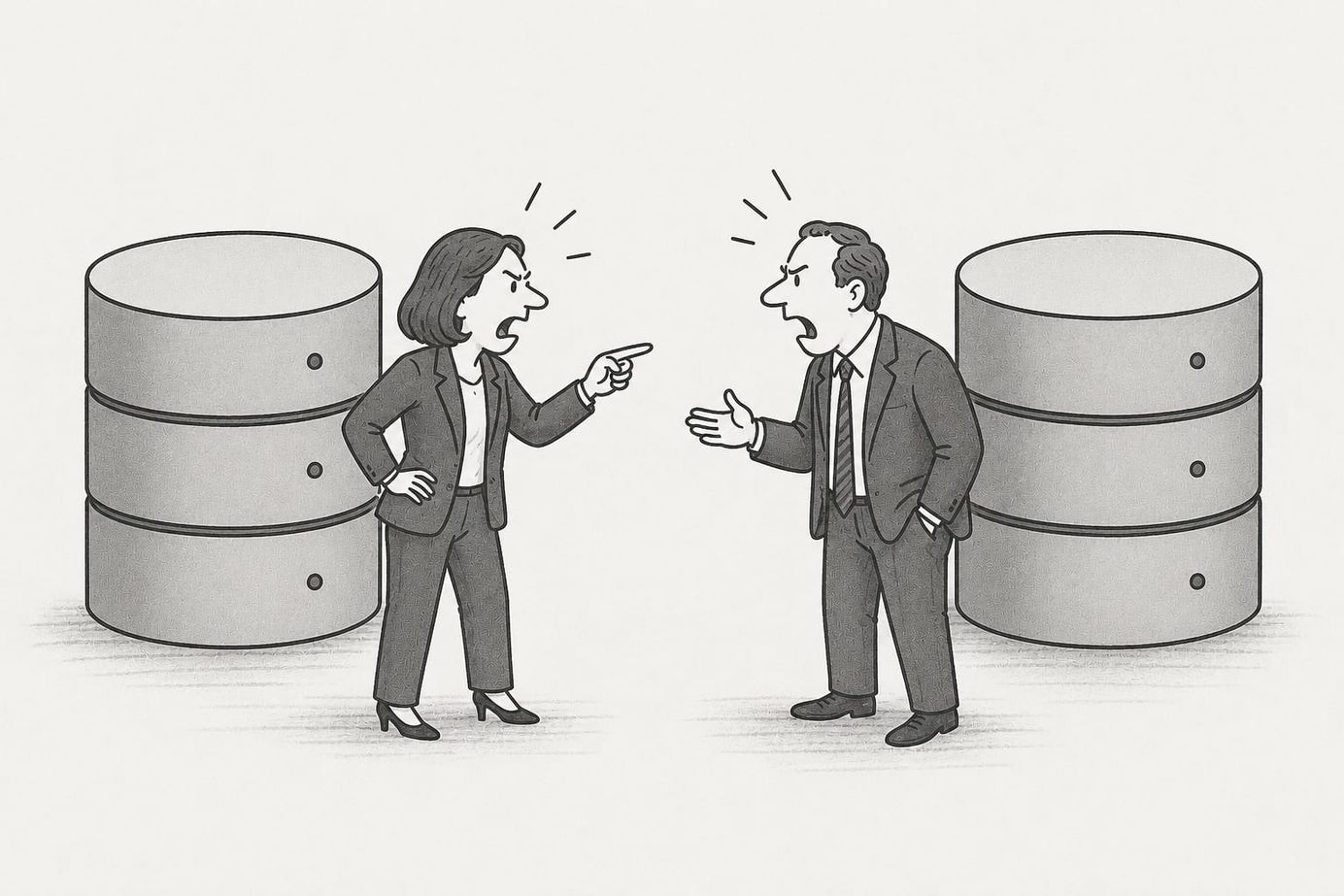
For decades, data work has fractured into specialisms. Database engineers built the operational stores that software relies on. Data engineers emerged to wrangle raw data from source systems into lakes for analysis – until we discovered, predictably, that exfiltrating data from its source context left us with swamps rather than lakes. Analytics engineering then arrived to apply engineering rigour to preparing that data for use. Each wave solved a real problem... and created a new silo.
Agentic AI is now collapsing these functions, and the implications run deeper than most organisations have yet recognised.
The driver is simple: agents need both operational and analytical data, simultaneously. They reason using one and act using the other. You cannot estimate customer lifetime value without analysing a significant cohort – but you cannot send a personalised offer without referencing an individual's live record, often pulled from an operational system in real time. The agent does not care which team owns which pipeline. It just needs high-quality data context.
Despite the excitement around agentic, these source systems will still exist. Your POS will keep writing to its transactional database. Your CRM, OMS, and loyalty platform will each retain their own operational stores, optimised for the workloads those applications were designed for. The exam question is therefore not "do I need to upgrade every source system" but "what sits between source systems and the agents that need to reason and act across them" – in other words, how do we architect the nervous system?
This forces an uncomfortable question most data leaders have side-stepped: where does the source of truth actually sit?
Database vendors have long argued their system holds the golden record. A CRM might be the first place a customer's new email address gets entered, but is any CRM, with its scope-limited data model, truly the golden record for that customer? Modern AI systems may draw on millions (or billions!) of data points per individual. Few transactional systems were designed with that in mind.
The distinction I like to draw is between authoritative sources – systems entitled to update other systems within their domain – and golden records – the most comprehensive, accurate, and enriched view of an entity.
A point-of-sale system is authoritative for transaction events flowing into your single customer view. It is not the golden record for the customer. The CRM is authoritative for the email address a customer typed in. It is not the golden record either. The golden record is a constructed view, assembled from many authoritative sources plus enrichment plus inference. Conflating the two is how organisations end up with agents reasoning over thin, stale, or contradictory context – usually with a helping of aggressive vendor lock-in.
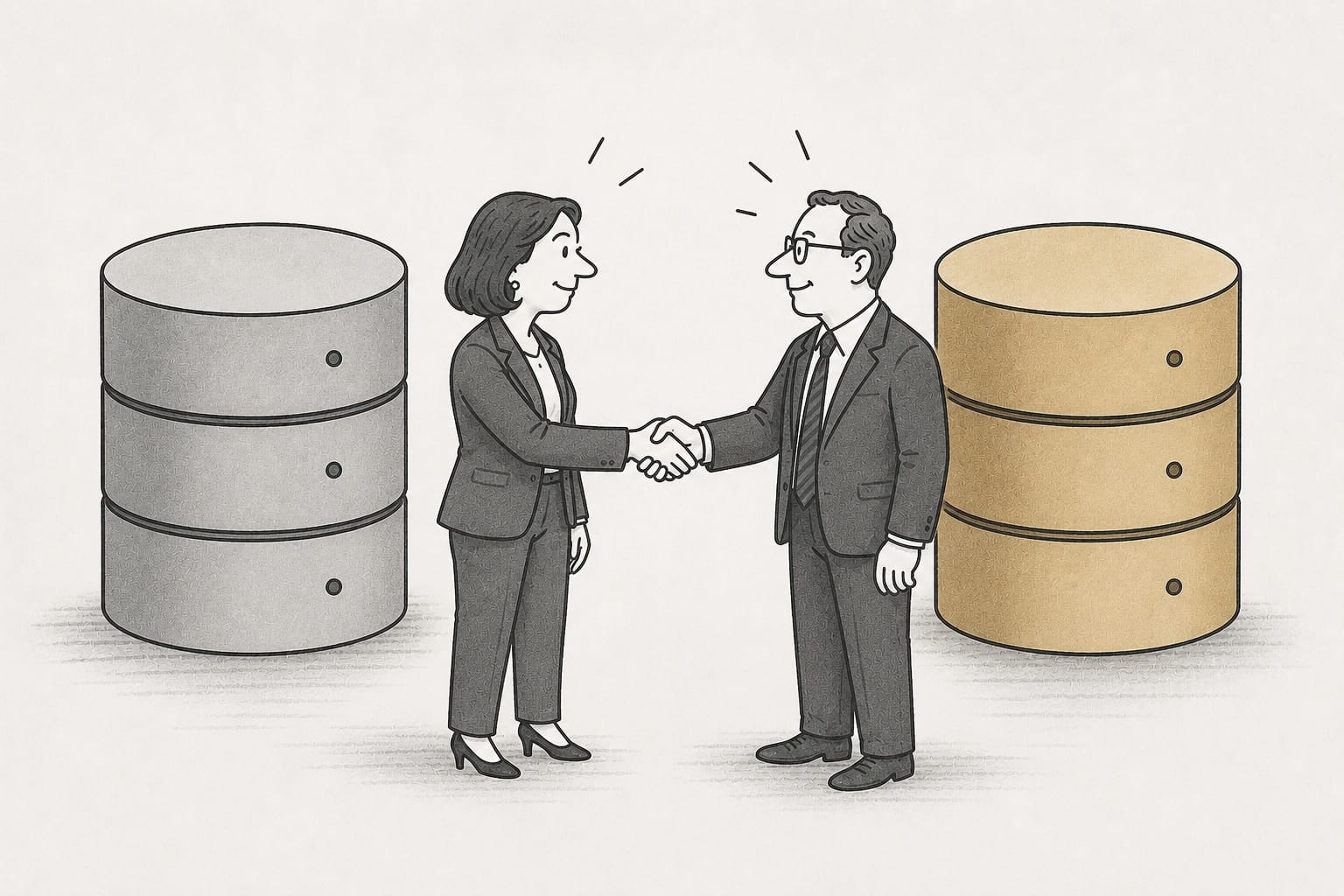
The infrastructure layer is starting to support this blurring natively. A generation of companies like Supabase, Neon, and Convex are building primitives that look operational and analytical at once: real-time, redundant, autoscaling, with edge-distributed reads and serverless compute that can sit equally comfortably behind a customer-facing application or an agent's reasoning loop. Whether the "AI-native" branding survives contact with enterprise reality is another question. But the architectural pattern they are betting on is the right one for an agentic world.
The talent implications follow. The clean lines between database, data, and analytics engineering are blurring. Whether that means converged roles or tighter contracts between specialists is still being worked out; but organisations clinging to the old org chart will find their agents starved of the context they need to be useful. AI engineering might be data engineering – but in an agentic world the latter needs to go far beyond data quality frameworks.
If your technology leadership cannot tell you which systems are authoritative versus which provide the golden record, you have a problem – and like all technical debt, this gap will compound rapidly as agents mature.
– Ryan
P.S. Data management practitioners have long distinguished system of record from system of reference; agentic AI makes the distinction operationally critical. As they say, plus ça change... except this time the stakes compound faster.
Cover image by ChatGPT.

Q* - Qstar.ai Newsletter
Join the newsletter to receive the latest updates in your inbox.